
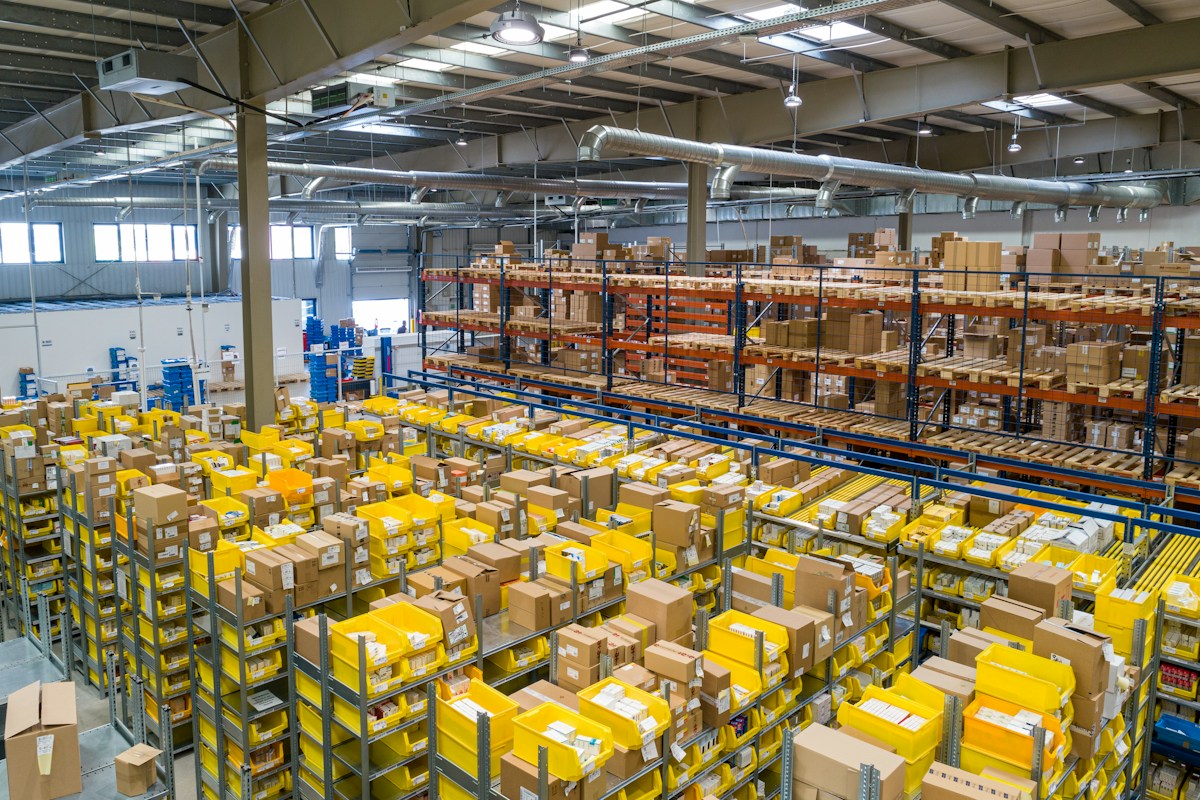
When a business imports goods into Canada, the product rarely arrives exactly when the customer needs it. Containers land early, sales forecasts shift, and receiving docks fill up. Flexible warehousing, the ability to park inventory safely for days or weeks before it moves on, is one of the most underrated tools in a growing importer's playbook. Increasingly, shippers are asking whether their trucking partner can provide it too.
The problem: freight timing and inventory timing do not match
Ocean and rail schedules follow their own logic. A vessel may arrive a week ahead of plan, and a customer may delay a launch. Without somewhere to stage the goods, the container sits at the terminal accruing demurrage and per diem, or it is forced into your own facility whether or not there is space. Both outcomes eat margin.
What short-term storage actually solves
- Demurrage avoidance: moving a box out of the terminal quickly stops the storage clock.
- Buffer capacity: seasonal peaks no longer require a long lease on space you use only a few months a year.
- Transloading and cross-docking: goods can be broken down, re-palletized or consolidated for onward delivery.
- Staged delivery: inventory can be released to stores, job sites or customers in smaller, scheduled drops.
- Cash flow control: you pay for space only while you need it.
Benefits of combining trucking and storage
Every handoff between companies is a place where freight can be delayed, damaged or lost in a spreadsheet. When the same provider moves the container and stores the contents, the pickup, unloading and put-away happen under one roof of accountability. You get fewer emails, a single set of records and quicker answers when something goes wrong.
There is also a practical scheduling advantage. A carrier that controls its own storage can sequence deliveries intelligently, dispatching the trailer the moment you release inventory rather than waiting for a third party to confirm availability.
What to verify before you store freight
Security and condition of the space
Ask about access control, camera coverage, fire protection, pest control and how the facility handles temperature or moisture-sensitive goods. Confirm whether storage is indoor, yard-based or a mix, and what that means for your product.
Inventory accuracy
Good providers tag and log every pallet on arrival, reconcile counts against bills of lading and report discrepancies quickly. Request a sample inventory report so you know what visibility you will actually receive.
Insurance and liability
Carrier cargo coverage does not automatically extend to goods in storage. Clarify the provider's warehouse liability limits and whether you need supplemental coverage of your own.
Handling capabilities
Check forklift capacity, dock configuration, loading equipment and whether the site can manage oversize, palletized or loose-loaded freight. If you ship flatbed or partial loads, confirm the facility can load them efficiently.
Understanding storage pricing
Storage is typically priced per pallet per month or by square footage, with handling charges on top for receiving, put-away and outbound loading. Ask whether there are minimum terms, special fees for odd-sized items and how partial months are billed. Compare the total landed cost, including trucking, rather than judging storage rates in isolation.
Signs it is time to add storage to your logistics plan
- You are paying demurrage or detention fees more than occasionally.
- Your own warehouse hits capacity during peak months.
- Customers want staggered deliveries rather than one large drop.
- You are spending staff time coordinating separate haulers and warehouses.
- You plan to expand into new regions and need a staging point near your lanes.
Start small and measure
A sensible first step is a pilot: place one or two inbound containers into storage, track handling time and accuracy, and compare costs against your current process. If the results are good, scale up. If you need a partner in the Greater Toronto Area, you can review the services at S&R Trucking or look at its overview of container solutions to see how trucking and storage can be coordinated.
Flexibility is the real prize. Importers that can absorb timing surprises without paying penalties are better positioned to keep customers happy and margins intact, and the right warehouse and trucking relationship makes that flexibility routine rather than heroic.