Most couples start shopping for an engagement ring with a number in mind, then watch that number wobble the moment they see real prices. The good news is that a smart budget is less about spending more and more about knowing where each dollar actually shows up. This guide walks through how to divide your budget, which quality factors deserve your attention, and how to avoid the common traps that quietly inflate the final bill.
Start With What You Can Comfortably Spend
Forget the old rule about spending a set number of months of salary. Those formulas were invented by marketers, not by jewelers. A better starting point is a figure you can pay without stress, whether that is cash, savings, or a short financing plan you fully understand. Once you have that number, subtract a small cushion of five to ten percent for sizing, insurance, and a proper box or case. That remainder is your real shopping budget.
It also helps to decide early who is in the conversation. Some couples pick the ring together, others want a surprise. If it is a surprise, ask a friend or family member about her style, metal preference, and ring size so you are not guessing. A wrong guess costs far more than a few extra questions.
Split the Budget Between Stone and Setting
A ring has two cost centers: the center diamond and everything around it. A common mistake is putting almost the entire budget into the stone and leaving the setting as an afterthought. The setting decides how the diamond sits, how secure it is, and how the ring wears over decades. As a rough guide, many buyers put about two thirds toward the stone and one third toward the setting and metal, then adjust from there.
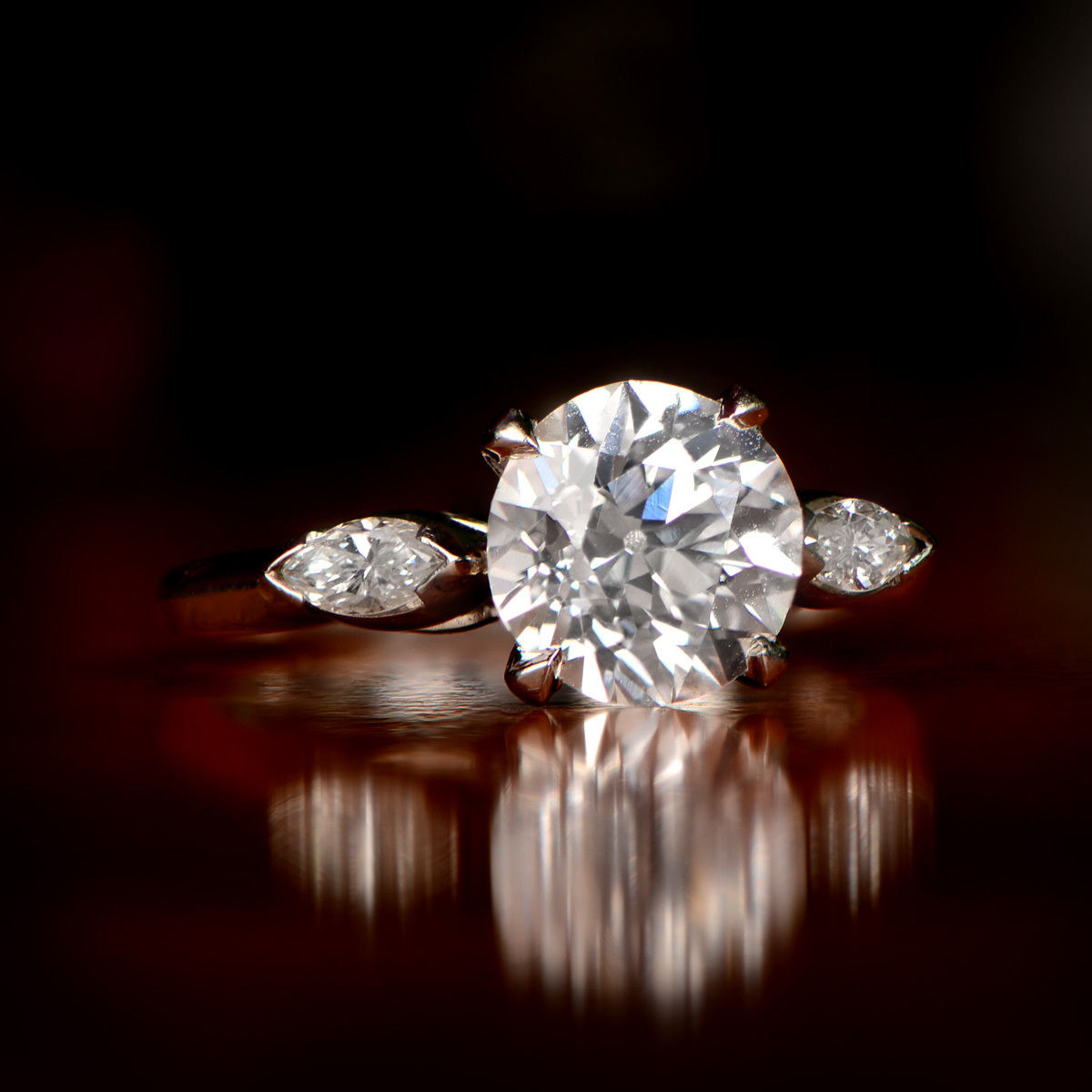
If you want a larger-looking center stone, a simple solitaire setting leaves more of the budget for the diamond. If you love detail, such as a halo or side stones, expect the setting to take a bigger share. Browsing a range of diamond engagement rings side by side is a quick way to see how setting style changes the price of the same stone.
Know Which of the 4Cs Move the Price Most
Carat weight gets the headlines, but cut is the factor that determines how much a diamond sparkles. A well cut stone can look livelier and larger than a heavier one with a poor cut. If you have to prioritize, protect the cut grade first.
Color and clarity are where you can often save. Most people cannot tell the difference between a near-colorless stone and a colorless one once it is set in a ring, especially in yellow or rose gold. In the same way, a stone graded slightly included but still eye-clean costs noticeably less than a flawless one, and looks identical to the naked eye. Ask to see the stone in person or in magnified video before you decide, because the grade on paper only tells part of the story.
Carat weight has its own pricing quirks. Prices jump at round numbers such as one carat, so a stone just under the mark, say 0.9 carat, can look nearly identical while costing much less. That small compromise is one of the oldest budget tricks in the trade, and it still works.
Consider Lab-Grown Stones to Stretch the Budget
Lab-grown diamonds are chemically and optically the same as mined diamonds. They are made in controlled conditions rather than pulled from the ground, and they usually cost significantly less for the same size and quality. For many couples that means moving up a size or a quality grade without increasing what they spend. There is also a values angle: buyers who care about sourcing often like the traceability and conflict-free nature of lab-grown stones.
If this route interests you, explore lab-grown diamond jewelry to compare options and see how pricing differs across styles. Whichever way you go, make sure the stone comes with a grading report from a recognized lab so you know exactly what you are paying for.
Choose the Metal and Setting With Daily Wear in Mind
An engagement ring is worn every day, so durability matters as much as looks. Platinum is dense, naturally white, and very durable, though it carries a higher price. White gold looks similar and costs less but may need re-plating over the years. Yellow and rose gold are classic and forgiving of daily knocks.
Prong settings show more of the diamond and let in more light, while bezel settings wrap the stone in metal for extra protection. If you work with your hands or have an active lifestyle, a lower, more protective setting may be the smarter choice, even if it costs the same as a taller one.
Watch for Hidden Costs
The sticker price is rarely the whole story. Before you commit, ask about the following:
- Resizing fees and whether the first resize is included
- The return window and whether the ring can be exchanged or refunded
- Warranty coverage and what it excludes
- Insurance, which is usually a small yearly cost but worth having
- Engraving and any custom work charges
A retailer with clear, written policies on all of these is usually a better bet than one offering a slightly lower price with vague terms.
Buy From a Seller You Can Actually Talk To
Buying a ring online is perfectly reasonable, and it often means better prices and wider choice. What matters is whether you can reach a real person when you have questions. Look for gemologists available by chat, phone, or email, and for policies that make returns easy. A seller who is happy to explain the grading report in plain language is a seller who is thinking about the long term.
If you would like to see how a full catalog is organized across rings, earrings, and pendants, take a look at Bliss Diamond, where you can filter by style, metal, and diamond type to narrow things down quickly.
A Simple Checklist Before You Pay
Confirm the total price including tax, shipping, and any fees. Check that the grading report matches the stone description. Make sure you understand the return policy and the warranty. Verify the ring size and ask what happens if it needs adjusting. And finally, take a day to compare two or three options calmly rather than deciding under pressure.
Setting a budget is not about limiting the moment. It is about making sure the money goes toward the parts of the ring you will love and notice every day. Start with a realistic number, protect the cut, save on details the eye cannot see, and choose a seller who makes the process easy. Do that, and the ring you pick will feel like a good decision long after the day itself.